

Research Progress
Supercritical Scaling Theory Reveals the “Universal Code” of Asymmetry
Water boiling into steam, a magnet losing its magnetism upon heating—these phenomena near critical points may seem vastly different, yet they obey the same universal scaling laws. However, a question has long puzzled physicists: when the Hamiltonian of a system is symmetric (as in the Ising model) versus when it is not (as in gas-liquid systems), what is the essential distinction in their critical behavior?
For more than a century, investigations into asymmetric effects near critical points have largely centered on the "rectilinear diameter law," proposed by Cailletet and Mathias in 1886. This empirical law states that the average density of the gas-liquid coexistence curve varies linearly with temperature:
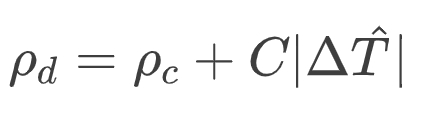
In symmetric systems, this linear relation holds exactly. Some theoretical predictions have suggested that asymmetry would break the linearity, replacing it with a non-trivial power-law term. However, these studies have remained confined to temperatures below the critical point and to an extremely narrow scaling window, making experimental validation challenging and consensus elusive.
Recently, Dr. Yuliang Jin of the Institute of Theoretical Physics, Chinese Academy of Sciences, and Dr. Xinyang Li of Beihang University have published a paper in Physical Review Letters that extends this century-old problem from the subcritical regime to the supercritical regime. They propose a "supercritical–subcritical correspondence," in which the newly defined supercritical crossover lines (the L⁺ and L⁻ lines) [1] are treated as mirror images of the subcritical coexistence curve. Their work yields a universal conclusion: asymmetry emerges in the correction terms of the scaling law, and these corrections can carry, surprisingly, antisymmetric coefficients.
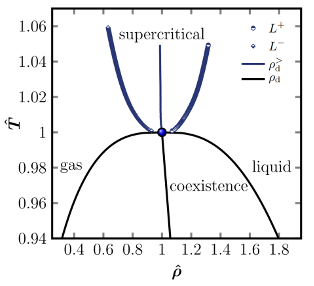
Figure 1: Phase diagram illustrating the supercritical–subcritical correspondence.
The theory attributes the origin of asymmetry to the "linear mixing" of physical fields, which generates universal scaling corrections on the L⁺ and L⁻ lines. Remarkably, the coefficients of these corrections exhibit perfectly symmetric and antisymmetric patterns—with signs that are either opposite (symmetric) or identical (antisymmetric) on the two lines:

When the two lines are averaged—yielding the so-called "supercritical diameter"—the antisymmetric corrections persist, and their functional form is exactly the same as that of the subcritical "singular diameter."
To test their predictions, the researchers analyzed data for several supercritical fluids (including oxygen and carbon dioxide) from the NIST database. The theoretical and experimental results showed excellent agreement within the studied range. In contrast, over the same temperature interval, the subcritical coexistence diameter still adheres almost perfectly to the rectilinear law, with the antisymmetric power-law correction being nearly invisible. This indicates that the supercritical region acts as a natural "magnifying glass" for observing antisymmetric power-law corrections. Strikingly, the asymmetry effects for different substances are nearly identical, revealing a universality rooted in asymmetry itself.
This framework is not limited to gas-liquid and liquid-liquid phase transitions; it can also be extended analogously to other systems, such as black-hole thermodynamics. As the researchers remark, "Even when symmetry is broken, universal laws still manifest in a more refined way." In other words, asymmetry in critical phenomena does not undermine universality—rather, asymmetry extends universality in a more intricate form.
This work was supported by the National Key R&D Program of China and the National Natural Science Foundation of China.
Original article:
https://link.aps.org/doi/10.1103/dj1t-tvw6
Reference:
[1] Xinyang Li and Yuliang Jin, PNAS 121 (18), e2400313121 (2024).
Contributor:Yu-liang Jin